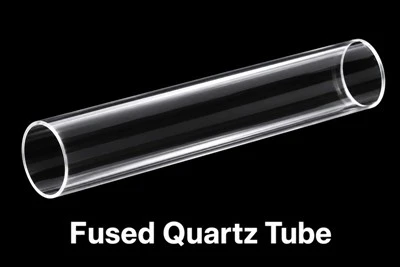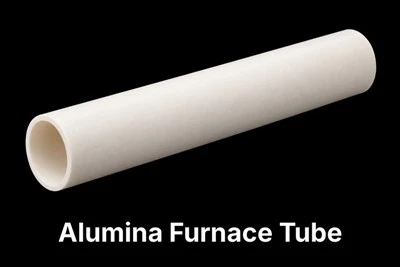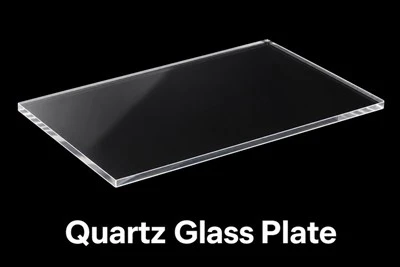
Outstanding High-Temperature Resistance
It has a softening point of approximately 1730°C and offers stable long-term performance in environments ranging from 1100°C to 1200°C. It can withstand peak temperatures of up to 1400°C for short periods, making it suitable for a wide range of high-temperature industrial applications.
Exceptional Thermal Shock Resistance
Quartz glass has a thermal expansion coefficient only one-tenth to one-twentieth that of ordinary glass-as low as 5×10⁻⁷/℃. It can withstand drastic temperature fluctuations; for instance, it will not shatter even when heated to 1100°C and immediately plunged into water at room temperature.
Excellent Spectral Transmission
High-purity quartz glass offers an exceptionally broad transmission range, spanning from the far-ultraviolet (160 nm) to the far-infrared (5 μm). With visible light transmission exceeding 93%, it is one of the few materials capable of high-quality ultraviolet transmission, meeting the specialized requirements of fields such as precision optics and photolithography.
Superior Chemical Stability
With the exception of hydrofluoric acid, hot phosphoric acid, and high-temperature strong alkaline solutions, it is virtually inert to most acids, salts, and standard chemical media. Its acid resistance is 30 times that of ceramics and 150 times that of stainless steel, ensuring stable performance even in high-purity production environments.