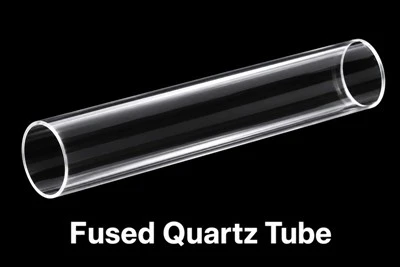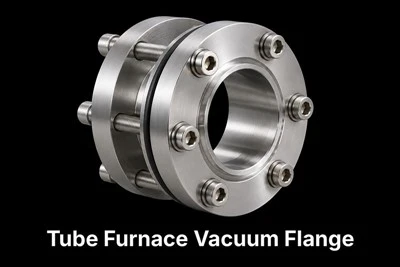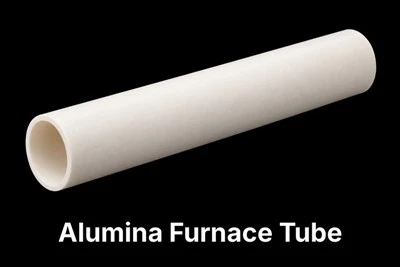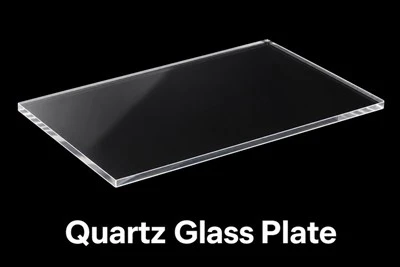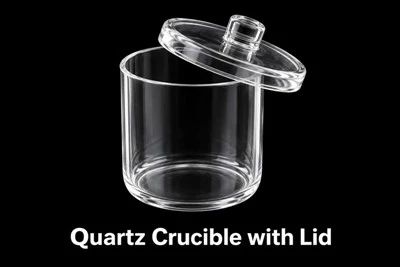
When selecting fused quartz tubes, it is essential to align the requirements of your specific application-such as purity, thermal history, optical transmission, and assembly precision-with verifiable material and dimensional specifications. Tuohai's fused quartz tubes, based on a substrate with an SiO₂ content of ≥ 99.99%, address the most critical factors that should be prioritized during the selection process.

The first criterion concerns purity and hydroxyl (OH) content.
The SiO₂ purity level determines the risk of metal ion contamination; a 99.99% purity grade serves as the fundamental threshold for semiconductor diffusion, CVD, and photovoltaic processes. Beyond overall purity, one must also consider the OH content: at high temperatures, hydroxyl groups can accelerate crystallization and deformation. For semiconductor-grade applications, it is typically necessary to keep OH levels low. If the process involves deep-ultraviolet (DUV) light or requires high dimensional stability, priority should be given to tubes with low OH content or even those made from synthetic quartz.
The second criterion involves temperature resistance and thermal shock stability.
These tubes have a continuous operating temperature of approximately 1100 °C, can withstand temperatures up to 1200 °C for short periods, and have a softening point of approximately 1680 °C. Crucially, the coefficient of thermal expansion is only 5.5 × 10⁻⁷ /°C, which ensures resistance to cracking during rapid temperature fluctuations. When selecting tubes, it is important to distinguish between "continuous use" and "short-term peak" temperatures; prolonged exposure to temperatures near 1100 °C can shorten the tube's service life and potentially lead to softening or sagging. For large-diameter or thick-walled tubes, careful control of the heating and cooling rates is especially important.
The third criterion relates to optical and chemical compatibility.
With a transmission range of approximately 200 nm to 2500 nm-covering the ultraviolet to near-infrared spectrum-these tubes require careful verification of wall thickness and transmission rates, particularly for applications such as UV lamp sleeves or photochemical reactors. Chemically, fused silica is stable against most acids, halogens, and organic solvents-with the notable exceptions of hydrofluoric acid and hot phosphoric acid. However, at high temperatures, residues such as fingerprints, salts, or alkalis can induce crystallization; therefore, adherence to proper cleaning and handling protocols is an essential extension of the material selection process.
Fourth, consider dimensions and tolerances.
Outer diameters range from 1 mm (capillary) to 600 mm (large-diameter tubing), with options for thin-walled (optimized for heat transfer) or thick-walled (suitable for vacuum applications) configurations. When selecting, it is necessary to specify the outer diameter, wall thickness, length, and end-finishing method (e.g., cut, ground flat, or fire-polished). For precision assembly, stricter requirements regarding tolerances and straightness should also be defined.
In summary, selecting fused silica tubing does not require maximizing every single specification; rather, one should prioritize parameters based on specific operational needs to ensure optimal performance. Tuohai Quartz offers both standard and custom products, ranging from capillaries to large-diameter process tubes. We strictly adhere to ISO9001 quality management standards, with every unit inspected for diameter, wall thickness, straightness, and bubble defects. We provide tubing grades tailored to the distinct requirements of the semiconductor, photovoltaic, and laboratory sectors-supporting everything from initial prototyping to stable, high-volume supply-thereby helping to minimize the risk of equipment downtime.