Material Selection Technology
Purity Grading and Control
Semiconductor-grade high-purity quartz glass requires the total content of 16 impurity elements to be no more than 20 μg/g, while photovoltaic-grade allows up to 30 μg/g; this prevents impurities from contaminating components during high-temperature processes.
For general laboratory applications, industrial-grade quartz with 99.8% silica content may be selected to balance cost with basic heat and corrosion resistance requirements.
Type-Specific Selection
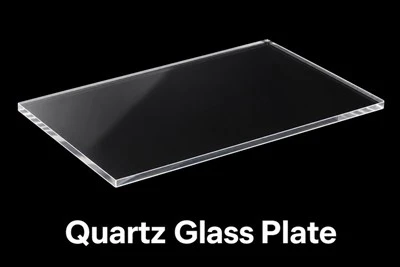
Transparent quartz glass offers light transmission exceeding 93%, making it suitable for optical experiments such as UV photocatalysis and spectroscopic testing.
High-purity opaque quartz glass contains uniformly dispersed micron-sized bubbles, providing excellent thermal insulation; it is ideal for thermal insulation components in semiconductor reaction chambers.
Core Processing Techniques
Cold Processing Technology
Cutting and drilling are performed using diamond saw blades, laser cutters, or ultrasonic drilling machines; processing energy is carefully controlled for this hard, brittle material to prevent edge chipping or cracking.
Subsequent rough grinding on surface grinders followed by manual fine polishing with diamond paste achieves micron-level precision, meeting surface quality standards for high-precision optical components.
ot Processing Technology
Oxy-hydrogen flames are used to soften quartz glass by heating it above 1700°C; certified glassblowers then manually perform operations such as blowing, drawing, joining, and welding to fabricate complex, custom-shaped apparatus like beakers and diffusion tubes.
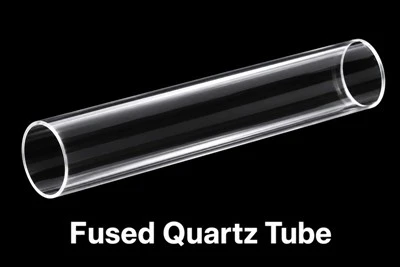
For industrial mass production, electromagnetic induction furnaces are employed; a pulling mechanism draws the raw material downward to form quartz tubes and rods of varying diameters, ensuring dimensional consistency across products.