Thermal Stability Principle
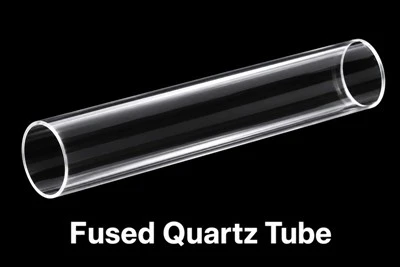
The exceptionally strong Si-O bond energy results in a softening point as high as 1730°C and a thermal expansion coefficient as low as 5.4 × 10⁻⁷/°C. The material can withstand rapid temperature fluctuations-such as cooling from 1100°C to room temperature-without shattering, while maintaining dimensional stability during prolonged exposure to high temperatures.
Optical Transmission Principle
Its amorphous structure eliminates crystal lattice scattering. By controlling impurity and hydroxyl content, the material achieves high transmittance across an ultra-wide spectral range-from the far-ultraviolet to the near-infrared-with visible light transmission exceeding 93%. Specific grades can be tailored to meet transmission requirements for particular wavelength bands, such as 185–2500 nm.
Chemical and Insulation Principle
Composed solely of SiO₂, the material is virtually inert to acids and alkalis (with the exception of hydrofluoric acid). Additionally, it possesses extremely high electrical resistivity-ten thousand times that of ordinary glass-making it an excellent material for corrosion resistance and electrical insulation.