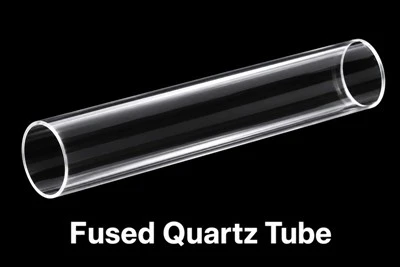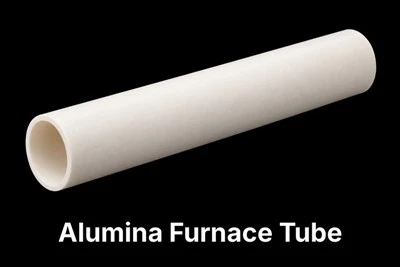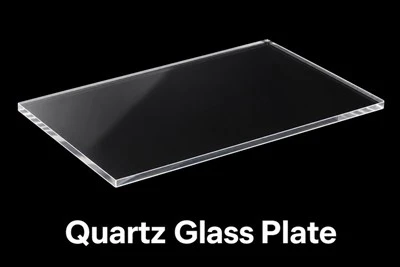
Microscopic Fundamental Structure
It is composed entirely of silicon dioxide (SiO₂). Its basic structural unit is the silicon-oxygen tetrahedron [SiO₄]; these tetrahedra are linked solely via oxygen atoms at their vertices to form a three-dimensional, disordered network, without sharing edges or faces.
Characteristics of Structural Disorder
The material exhibits short-range order but long-range disorder. The Si-O-Si bond angle varies widely between 120° and 180° (averaging approximately 145°), with this bond-angle variability serving as the primary source of structural disorder; meanwhile, the Si-O bond lengths and O-O distances are comparable to those found in crystalline silicon dioxide.
Macroscopic Structural Properties
This network of tight Si-O bonds-characterized by exceptionally high bond energy-endows quartz glass tubes with a very low coefficient of thermal expansion, excellent high-temperature resistance, and outstanding spectral transmission. Furthermore, the structure is homogeneous and lacks the symmetrical order of crystals, classifying it as a typical amorphous material.