Visual and Optical Inspection
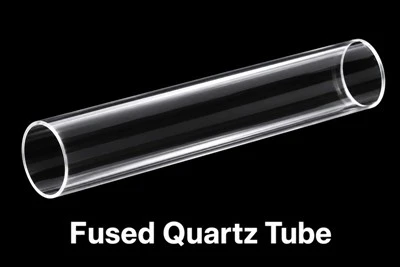
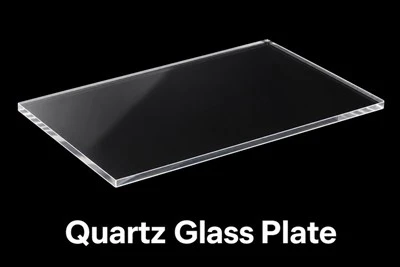
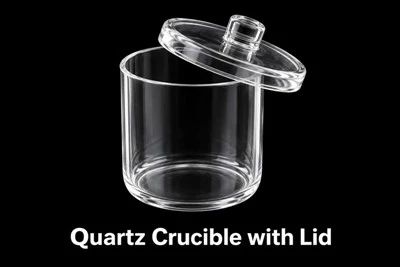
Genuine quartz glass is colorless and highly transparent, with visible light transmission exceeding 93% and high transmission in the ultraviolet range. Imitations made of ordinary glass often exhibit a faint green or blue tint, are largely opaque to UV light, and frequently contain internal defects such as spherical bubbles or swirl-like flow lines.
High-Temperature and Thermal Stability Testing
Genuine quartz glass has a softening point of 1730°C; it does not soften or deform after calcination at 1100°C, nor does it shatter when plunged into room-temperature water after being heated to 1100°C. In contrast, ordinary glass imitations soften rapidly at 700–800°C and are highly prone to shattering under drastic temperature changes.
Hardness and Chemical Property Testing
Genuine quartz glass has a Mohs hardness of 7 and cannot be scratched by standard knives; it is chemically inert to most acids and alkalis, with the exception of hydrofluoric acid. Ordinary glass imitations have a hardness of only 5–6, are easily scratched by knives, and possess far lower acid resistance than the genuine product.
Verification of Purity Parameters
Genuine products contain ≥99.95% SiO₂ with impurity levels below 1 ppm, a density of 2.2 g/cm³, and a refractive index of 1.458. Ordinary glass imitations have complex compositions and high impurity levels, with physical parameters (such as density and refractive index) deviating significantly from standard values; precise identification can be achieved through compositional analysis methods like ICP-MS.