Thanks to its excellent properties-such as high-temperature resistance, broad optical transmission, and corrosion resistance-quartz glass has become an indispensable foundational material for high-tech industries. Its core applications span several critical sectors:
Semiconductor and Photovoltaic Industries
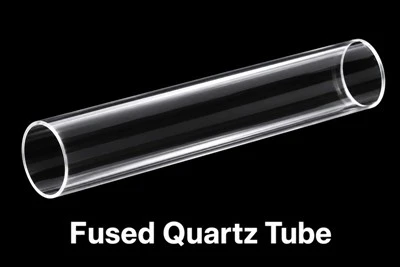
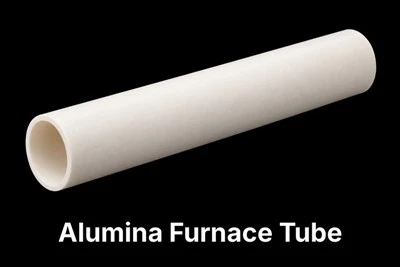
Semiconductor Manufacturing: High-purity consumables-such as quartz boats, furnace tubes, and baffles-are extensively used in the diffusion, etching, and cleaning stages of chip production, directly influencing chip yield rates.
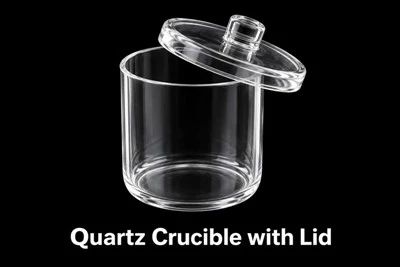
Photovoltaic Industry:Quartz crucibles are used to hold polysilicon feedstock; they are essential consumables for pulling monocrystalline silicon ingots, thereby supporting solar cell production.
Optical Communication and Optical Instruments
Fiber Optic Communication: Serving as a core material for optical fiber preforms, it supports optical signal transmission for 5G and gigabit optical networks and is also used as a target material for fiber drawing.
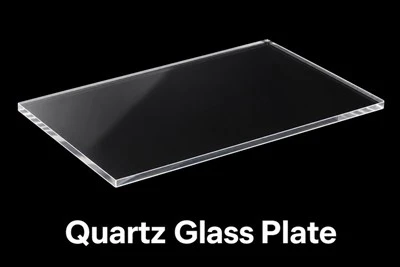
Precision Optical Instruments: As the material with the best ultraviolet (UV) transmission properties, it is used in spectrophotometers, laser windows, large astronomical telescope lenses, and photomask substrates for semiconductor lithography.
Aerospace and Specialty Lighting
Aerospace: Used for spacecraft observation windows and heat shields; it withstands intense radiation and maintains structural stability without shattering under extreme temperature fluctuations.
Specialty Light Sources: Used in halogen lamps and UV germicidal tubes, offering a combination of high-temperature resistance and excellent UV transmission.
Chemical Engineering, Laboratory Use, and Other Applications
Chemical Industry: Fabricated into corrosion-resistant containers and piping; it reacts only with hydrofluoric acid and boasts an acid resistance 150 times greater than that of stainless steel.
Laboratory Equipment: Used for high-temperature experimental vessels and high-purity product refining apparatus, suitable for long-term use at temperatures exceeding 1,100°C.
Medical Devices: Leveraging its excellent chemical stability and biocompatibility, it is used in the manufacture of certain high-precision medical devices.