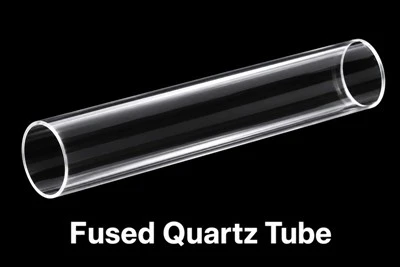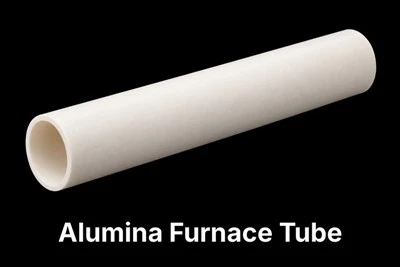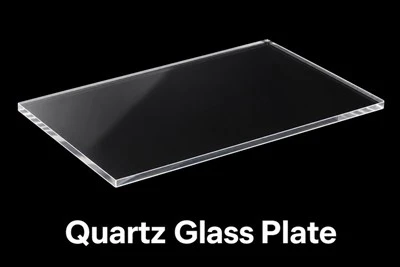
The core functionality of quartz glass tubes relies on the unique physicochemical properties derived from their high-purity, amorphous silicon dioxide structure. Their specific working principles vary by application scenario:
Heating Applications
When the internal resistive heating element is energized, it emits visible and near-infrared light. The quartz tube wall converts this energy into far-infrared radiation, which is directly absorbed by objects and transformed into heat. This process enables efficient radiant heating characterized by rapid temperature rise and high thermal efficiency.
Optical/Light-Transmitting Applications
Thanks to a dense microstructure and strong Si-O bonds, the material exhibits excellent light transmission across a broad spectrum ranging from ultraviolet to infrared (with visible light transmittance exceeding 93%). It serves as an optical window or a medium for UV/IR transmission without interfering with the optical observation or measurement of internal samples.
High-Temperature/Insulation Applications
An extremely low coefficient of thermal expansion allows the material to withstand prolonged exposure to temperatures above 1100°C without shattering during rapid thermal cycling. Additionally, its electrical resistivity is tens of thousands of times higher than that of ordinary glass; as an excellent electrical insulator, it ensures electrical isolation in high-temperature conditions-separating water and electricity and blocking current-making it suitable for demanding environments such as semiconductor manufacturing and high-temperature experimental setups.