Clarify Core Operational Requirements
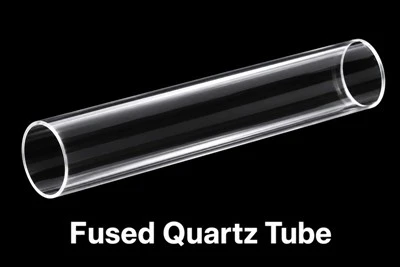
Temperature Resistance: For standard applications, choose ordinary quartz tubes capable of withstanding 1100°C for extended periods. For high-temperature production lines in sectors like semiconductors and photovoltaics, select low-hydroxyl (low-OH) tubing to minimize the risk of cracking caused by high-temperature devitrification; some specialized tubes can withstand temperatures up to 1450°C for short durations.
Purity and Optical Transmission: For general heating or standard laboratory work, continuous-melt tubes with an SiO₂ content of ≥99.6% are sufficient. However, for semiconductor and UV optical applications, choose high-purity tubing (≥99.99% purity) to prevent impurities from contaminating wafers or reducing light transmission.
Specialized Conditions: In highly corrosive environments involving hydrofluoric acid or strong alkalis, select corrosion-resistant custom-grade tubes. For large-diameter equipment, prioritize quartz tubes specifically manufactured for large-bore applications (diameters up to 600mm).
Focus on Processing and Quality Control Details
Prioritize products with uniform wall thickness, an absence of bubbles or pinholes, and clean, smooth cut edges (free of chipping). Avoid low-cost tubing that skips the annealing process, as residual internal stress can lead to sudden tube failure during high-temperature use.
Specialized processing-such as rounded bottom sealing, fire-polished ends, or custom bent shapes-can be tailored to equipment specifications to meet the installation requirements of non-standard machinery.